Trump said the United States and Iran have “key points of agreement,” including the absence of nuclear weapons

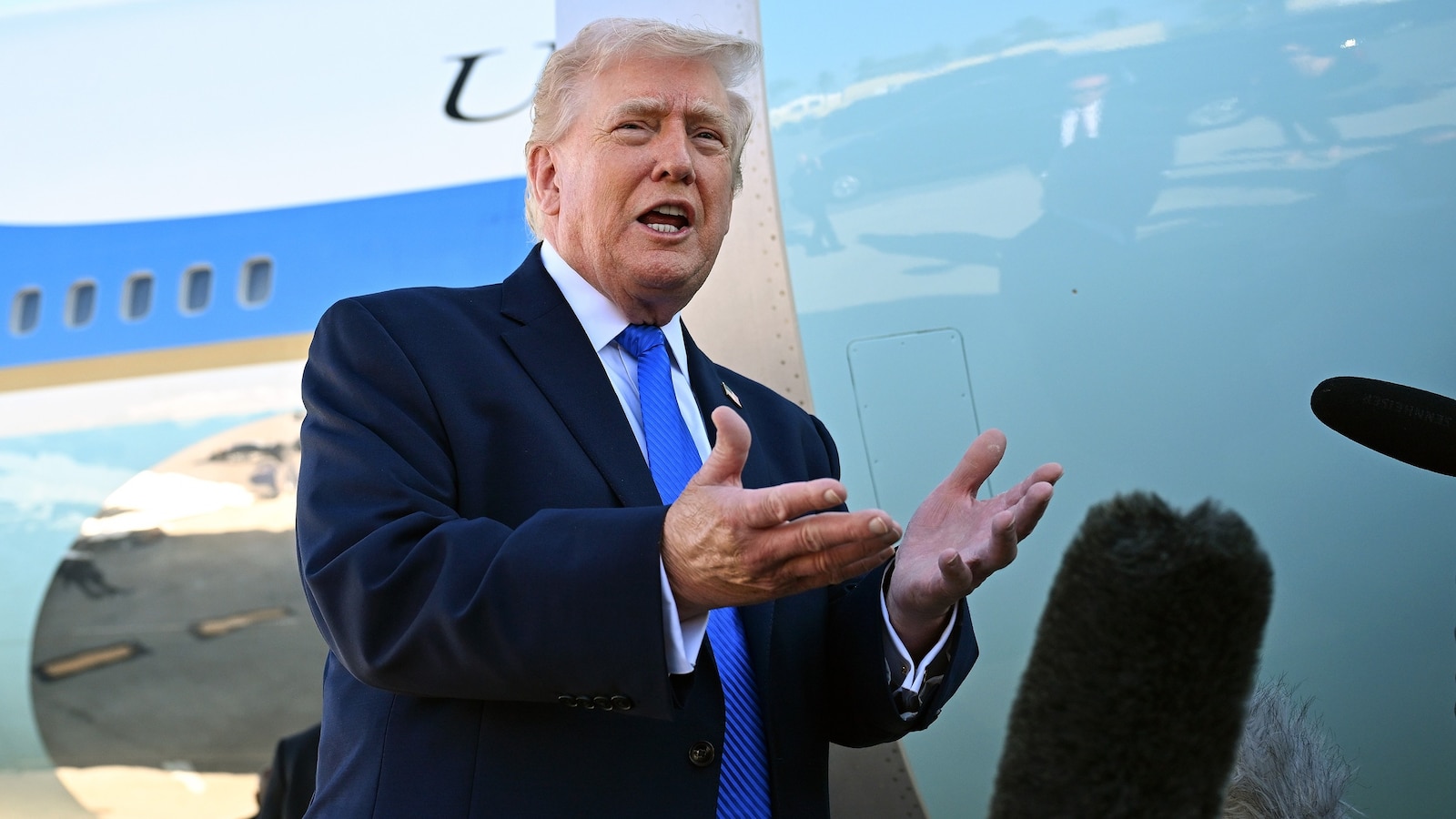
US President Donald Trump said on Monday, after US strikes on Iran’s energy infrastructure were postponed due to new negotiations with Tehran, that the talks will continue and that there are “key points of agreement.”
“They will not have a nuclear weapon, that’s the first thing,” Trump told reporters in Florida.
“This is point number one, two and three. They will never have a nuclear weapon,” the president said. “They agreed to that,” he added.
According to Iranian official media. Iranian Parliament Speaker Mohammad Qalibaf said, “No talks.” With the United States signed; Reports claim otherwise It is fake news aimed at influencing the financial and oil markets and distracting attention from the challenges facing the United States and Israel.
Iran has previously committed not to build a nuclear weapon as part of negotiations with the West, yet has continued to enrich nuclear material to levels approaching weapons grade.
President Donald Trump speaks to reporters before boarding Air Force One at Palm Beach International Airport, March 23, 2026, in West Palm Beach, Florida.
Roberto Schmidt/Getty Images
Iran’s intention to build a nuclear weapon, according to Trump, was a major justification for the war.
This was despite the US intelligence community’s assessment that Iran was not seeking a nuclear weapon following last summer’s Operation Midnight Hammer, which Trump said “obliterated” the country’s nuclear weapons programme.
When asked on Monday how the United States would get Iran’s enriched uranium if those talks go well, Trump suggested the Americans would go get it. Experts have previously told ABC News that a large US force would likely be needed on the ground to take the nuclear material, which is believed to be buried deep underground in facilities bombed by the US last year.
“It’s very easy, if we have an agreement with them, we will fall and we will accept it,” Trump said.
Trump also said he wants to see a “very dangerous form of regime change” in Iran.
Over the weekend, Trump issued an ultimatum to Iran to reopen the vital Strait of Hormuz within 48 hours or face major attacks on power plants and other energy sites.
Trump changed course Monday morning, announcing on social media that he had ordered the Defense Department to postpone the strikes for five days after what he described as productive talks about ending the war.
Iran’s semi-official Mehr News Agency reported that the Iranian Foreign Ministry denied holding talks with the United States.
Trump told reporters that the United States is talking to a “top person” in Iran, but not the new Supreme Leader Mojtaba Khamenei.
The president did not provide details about who exactly the United States was negotiating with, saying only that he was “the man I think is the most respected.” Just on Friday, Trump said there was “no one to talk to” after US and Israeli strikes killed much of Iran’s leadership.
Trump said Steve Witkoff, a White House special envoy, and Jared Kushner, the president’s son-in-law, led the talks on behalf of the United States. The president added that the talks went “perfectly” and will continue by phone on Monday. He said that a meeting would be held “soon.”

Jared Kushner and Special Envoy to the Middle East Steve Witkoff watch President Donald Trump introduce a Peace Council event at the World Economic Forum, on January 22, 2026 in Davos, Switzerland.
Chip Somodevilla/Getty Images
Trump added: “We’re doing a five-day period. We’ll see how it goes, and if it goes well, we’ll end up getting this settled, otherwise we’ll just keep pounding our little hearts out.”
Trump said there was a “very serious chance of reaching an agreement,” but he “can’t guarantee anything.”
He added: “All I’m saying is that we are in the midst of a real possibility of reaching an agreement.” “And I think if I were a betting man, I would bet on that. But again, I don’t guarantee anything.”
When Trump was asked if he thought Israel would abide by any peace agreement, he said Israel would be “very happy.”

The Ali 25 cargo ship in the Gulf near the Strait of Hormuz, March 22, 2026 in northern Ras Al Khaimah, United Arab Emirates.
Getty Images
Trump’s cessation of attacks on Iranian energy infrastructure sparked a positive reaction in stock and oil markets. The Dow Jones Industrial Average rose on Monday, and the price of oil fell about 10% to about $90 a barrel.
However, Iran’s stranglehold on the Strait of Hormuz remains.
When asked who would take control of the strait after the conflict, Trump said it would “be controlled jointly.”
“Maybe it’s me and the next Ayatollah, whoever he is,” the president said.
Meanwhile, thousands of US Marines and numerous Navy ships are heading to the Middle East, and the Pentagon is seeking $200 billion in additional funding.
When asked whether the administration would still ask for $200 billion if these talks ended the war, Trump replied: “It would be nice to get it.”