The number of deaths among on-duty law enforcement officers in the United States fell by about 25% in 2025, according to an annual report.
The report from the National Law Enforcement Officers Memorial Fund, which was shared with The Associated Press ahead of its release Tuesday, shows a decline in all categories of deaths, from a total of 148 deaths in 2024 to 111 last year.
The number of officers killed by firearms fell to 44, down 15% from 52 in 2024, the lowest number in at least a decade, according to the fund’s previous annual fatality reports.
“I always like to see a decrease in gun deaths. They are the tip of the spear for heinous acts,” said Bill Alexander, CEO of the Fund, a Washington, D.C.-based nonprofit that works to memorialize fallen officers, educate the public about the profession and improve officer safety.
Traffic-related deaths also decreased by approximately 23% between 2024 and 2025, including fatal traffic crashes and police officers killed after being struck by a vehicle — usually during a traffic stop.
“Even one officer killed is too many, and our ultimate goal is for there to be zero fatalities,” Alexander said. “But we are relieved by any decrease in these numbers.”
Alexander said the decline in traffic-related officer deaths can likely be attributed to an increased national conversation about officer safety on the road. More states across the country have passed “hopping around” laws that require drivers to exit the lane closest to traffic stops or accidents while overtaking. Alexander said there are increasing efforts to direct officers to approach the passenger side of cars during traffic stops and move them out of the travel lanes.
It is difficult to determine the reason behind the decline in the number of deaths due to firearms. While many departments have provided increased safety training and have better equipment for firearm injuries, Alexander said luck and other unquantifiable factors also play a role.
“Some of it could be traced back to an officer-involved shooting near the hospital or the officers may have had a tactical emergency kit or better equipment to stop the blood,” he said.
He said the lower number of deaths also does not mean a lower number of officer-involved shootings or shootings.
The National Fraternal Order of Police tracks the number of officer-involved shootings, both fatal and non-fatal. This report does not include incidents in which officers were shot but not injured by gunfire.
The 2025 FOP report, released this week, showed there was an uptick in the number of officers shot on duty last year — rising from 342 in 2024 to 347 in 2025.
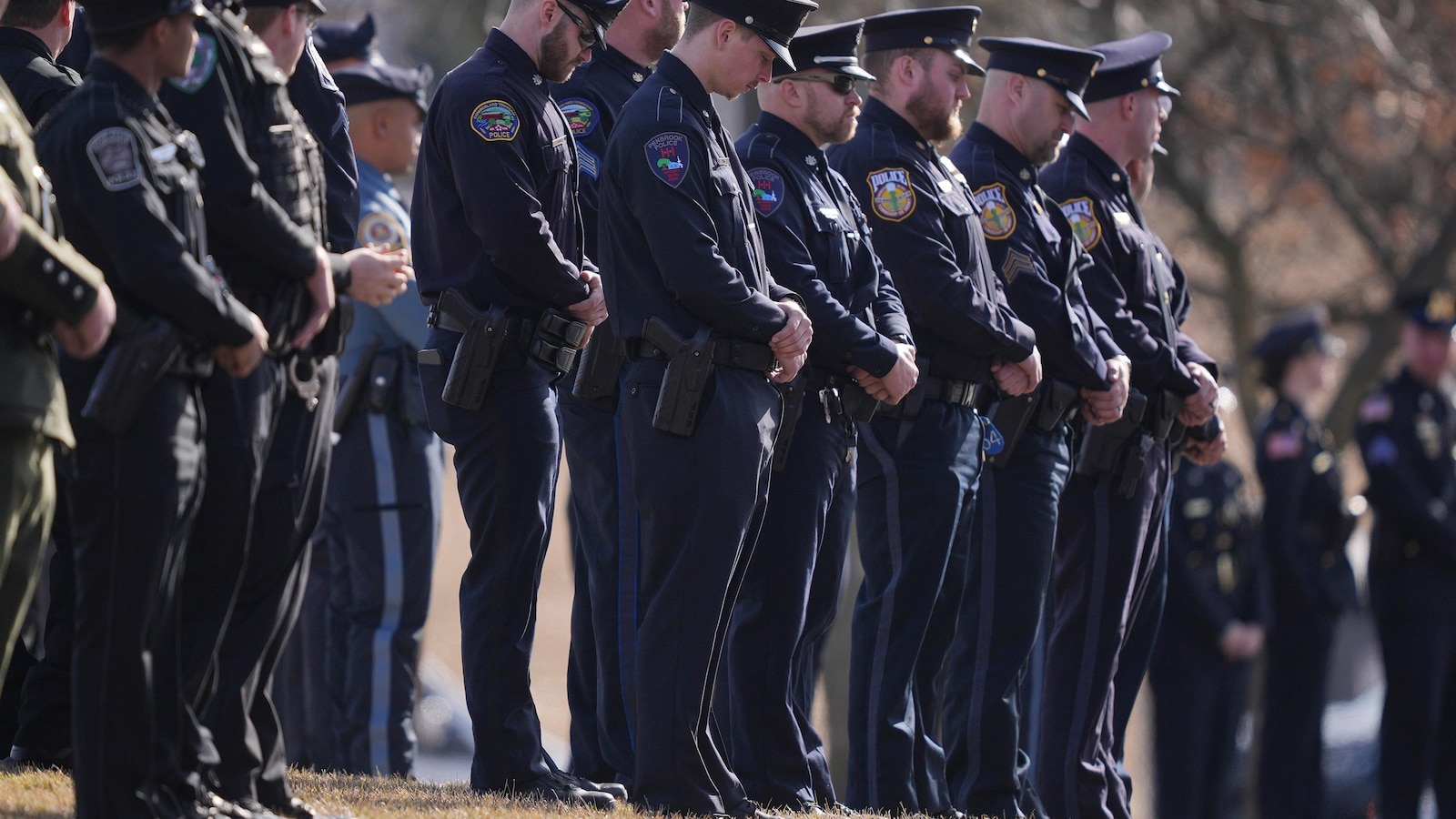
Among the notable shooting deaths in 2025 was Andrew Duartea West York Borough Police Department officer who was shot and killed in February while responding to a man who had taken several people hostage at a York, Pennsylvania, hospital. Law enforcement officers from across the country attended funeral services Monday for the Delaware state trooper Matthew “Ty” Snookwho was shot and killed while working an extra shift at a DMV office on Dec. 23, after a DMV employee was pushed out of the way of the gunman.
The National Law Enforcement Officers Memorial Fund’s fatalities report also showed no deaths among officers on duty in 17 states and Washington, D.C., and no deaths in the nation’s federal and tribal law enforcement agencies last year.
It also showed a 37% reduction in the “other” death category, which includes physical or medical problems caused by on-duty accidents and most other deaths such as stabbings, drownings or aircraft accidents. The number dropped from 52 in 2024 to 33 in 2025, and includes 14 officers who died last year from illnesses related to the response to the Sept. 11 terrorist attacks.
Previous annual reports included COVID-19 deaths, resulting in death numbers that increased dramatically in 2020 and 2021, but Alexander said deaths from COVID-19 were not included as line-of-duty deaths in the past two years. The report also does not include officers who committed suicide, although Alexander said the group is in conversations about how to honor and include those officers.