The State Department says charter flights are set to repatriate Americans stranded as travelers flock amid the Iran war

The State Department announced Wednesday that a charter flight for American citizens stranded in the Middle East was on its way to the United States — days after a war with Iran left thousands of American travelers stranded by combat operations. Which led to the closure of airspace in the region.
The department said the flight was “part of our ongoing efforts to help Americans return home,” and said additional flights would depart from the United Arab Emirates, Qatar, Saudi Arabia and Israel.
The move comes as hundreds of thousands of Americans stranded across the Middle East attempt to leave the region, facing flight cancellations and other travel disruptions.
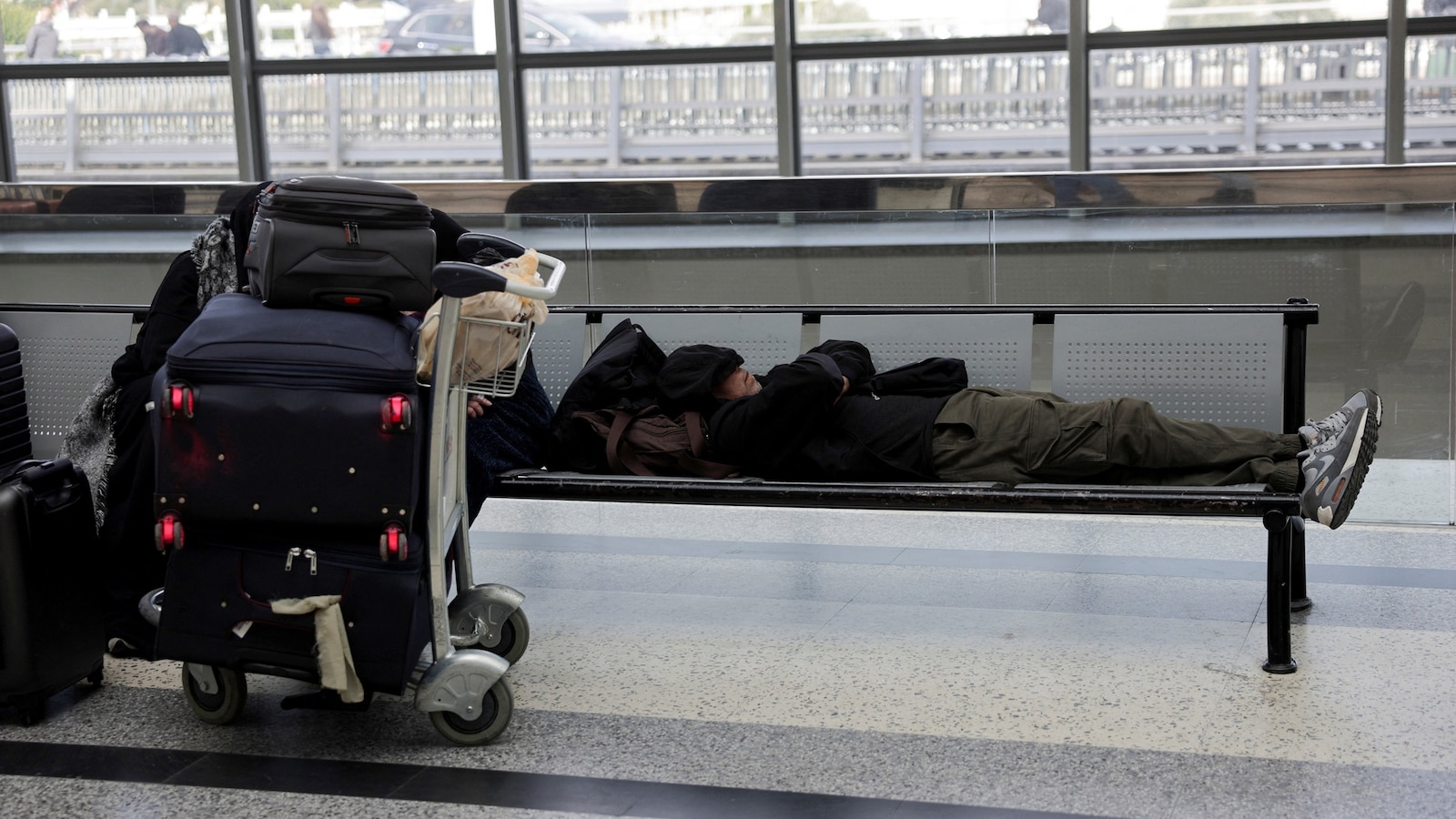
A man sleeps on waiting area seats inside Beirut Rafic Hariri International Airport as he waits for his departing flight, after an escalation between Hezbollah and Israel, amid the US-Israeli conflict with Iran, in Beirut, Lebanon, March 4, 2026.
Khalil Ashawi/Reuters
Chris Elliott, a pastor from Lexington, North Carolina, told ABC News that he and his family were stranded while visiting sites in Jerusalem. He said they ended up in a shelter as sirens sounded and incoming missiles were intercepted.
“We want Americans to be on American soil now,” Elliott said.
Elliott’s daughter, Riley, said it is frustrating and scary that she has been forced to shelter in place since the joint US-Israeli attacks on Iran began on Saturday.
“The scariest thing for me is trying to go to bed at night and then being woken up by the sirens,” Riley Elliott told ABC News.
Issued by the US State Department consultative On Monday, three days after the military operation, Americans were urged to leave 14 countries in the region immediately via commercial flights, but stranded American citizens said that had become too difficult, given the major disruptions to air travel.
The Trump administration is facing some criticism for apparently not having a plan to keep American citizens out of harm’s way before the joint operation.
Asked Tuesday by ABC News why so many Americans remained stuck in the Middle East in the absence of any advance warning of an attack on Iran, President Donald Trump said: “Well, because it all happened so quickly.”

An F/A-18F Super Hornet, attached to Strike Fighter Squadron 41, prepares to launch from the flight deck of the Nimitz-class aircraft carrier USS Adam Lincoln in support of Operation Epic Fury, March 3, 2026.
US Navy
White House press secretary Carolyn Levitt said during a press conference on Wednesday that the United States had reported the risk of traveling to the region.
“There were a lot of signals put out by the State Department,” Levitt said. “The Secretary of State issued Level 4 Travel tips “Dating back to January for many of these countries in the region,” she said, adding that she “advises extreme caution and not to send travel alerts to Americans in the region.”

White House Press Secretary Carolyn Leavitt lays out steps US citizens in the Middle East should take in the wake of US strikes on Iran as she speaks during a news conference in the James S. Brady Briefing Room of the White House, March 4, 2026, in Washington.
Kevin Deitch/Getty Images
However, a review of the State Department’s travel warnings indicates that before the conflict began, of the 14 countries that American travelers were urged to leave, only eight were listed as Level 1 or Level 2 — meaning exercising normal precautions or increasing caution.
Levitt also claimed that since the start of the US-Israeli attack on Iran, more than 17,500 Americans have returned “safely home from the Middle East, with more than 8,500 US citizens returning home to the United States just yesterday.”
Many US embassies in the region, including some that were attacked, said they were unable to assist citizens trying to leave.
“Our embassies and diplomatic facilities are under direct attack from a terrorist regime,” Secretary of State Marco Rubio told reporters Tuesday in Washington.
In response to a question about whether there were plans to evacuate Americans before the attack occurred, Rubio said: “This is the plan that we are trying to implement.”
“The problem or challenge we face is the closure of airspace,” Rubio said, adding that some airports were closed after being hit. “So, this is a challenge, but rest assured, we are confident that we will be able to help every American.”

A man walks past destroyed buildings after airstrikes in central Tehran, March 4, 2026.
AFP via Getty Images
Odis Turner, a private chef from South Carolina, told ABC News that he has been stuck in his hotel in Doha, Qatar, since the start of the military operation. He said the unexpected experience of being in war left him “frustrated and anxious” and feeling helpless.
“How do you expect us to leave a country whose airspace is closed? People are really stranded here,” Turner said in a video recorded on Tuesday. “I really don’t know what to do. I have contacted the embassy, consulate and airlines. There is no information about when I will return home. It is chaos.”
American Lisa Butler said that the military conflict left her and her family, who were part of a large travel group, stranded in Abu Dhabi Before they were evacuated to Dubai.
Butler told ABC News how she and her family learned while in Abu Dhabi that they were vulnerable to a major military conflict erupting in the region: “We were standing… outside this beautiful mosque, looking up at the sky and seeing these missiles that had been intercepted.”
Oliver Sims, an American from Texas, told ABC News that he is stuck in Qatar.
“A few minutes ago I was listening to some explosions going off above my head,” Sims said. “And, you know, I know the officials said use commercial means, but there are no commercial means here to use. So it’s really difficult to try to find a way out.”
When asked to describe the conditions in Qatar, Sims said that he woke up one night to “very loud explosions” that shook the windows of his hotel room.
“I looked out my window and saw a bunch of debris raining down outside the hotel window,” Sims said. “And it’s very annoying, too, because it’s not just how loud it is, but also how it physically shakes you. The rumbling is actually quite violent.”
ABC News’ Shannon Kingston and Jack Moore contributed to this report.